

AI video analytics has transformed traditional surveillance systems from passive monitoring tools into intelligent security solutions that can detect, analyze, and respond to events in real-time. Modern businesses, government agencies, and security professionals increasingly rely on these advanced systems to enhance safety, reduce response times, and extract meaningful insights from video footage.
Selecting the right AI video analytics company requires understanding the specific features, capabilities, and industry expertise that each provider offers. The landscape includes established security giants alongside innovative startups, each bringing unique strengths in areas such as behavioral analysis, object recognition, and predictive modeling. Factors like integration capabilities, scalability, accuracy rates, and industry-specific solutions play crucial roles in determining which platform best meets organizational surveillance needs.
1. Genetec Security Center
Genetec Security Center stands as a unified physical security platform that integrates video surveillance, access control, and analytics capabilities. The company maintains its position as the global leader in enterprise physical security software according to industry analyst reports.
The platform provides comprehensive security management for enterprises and government institutions.Genetec collaborates with specialized analytics providers (e.g., BriefCam) to complement its platform with advanced AI video analytics capabilities.
Security Center offers centralized management of surveillance systems across multiple locations. The platform supports edge computing capabilities and real-time threat detection through AI-powered analytics.
Pros:
- Market-leading position in video surveillance software
- Unified platform combining multiple security functions
- Strong enterprise and government client base
Cons:
- May require technical expertise for full implementation
- Pricing typically targets enterprise-level budgets
- Relies on third-party partnerships for some analytics features
2. Memories.ai
Memories.ai is building an advanced AI platform focused on creating a "visual memory" layer for video content, empowering applications to see, remember, and understand video at scale. The company’s AI technology helps enterprises and prosumers alike by enabling real-time threat detection, human re-identification, slip and fall detection, and intelligent video search through natural language. Its AI capabilities extend beyond security to sectors like sports and customer service by providing insights, task recognition, and behavior analysis.
The platform features rapid incident search, live video alerts, and personnel tracking to optimize operational workflows. For creative prosumers, Memories.ai offers tools for video ideation, story drafting, editing, and clip creation powered by conversational AI. The company claims performance superiority over other AI systems like Gemini and ChatGPT in video understanding.
Pros:
- Comprehensive AI-powered video understanding and search functions
- Supports real-time threat detection and diverse use cases including security and customer monitoring
- Offers tools for both enterprise and prosumer video applications
- Transparent, tiered pricing with free, plus, and custom enterprise plans
Cons:
- Newer platform with limited long-term market presence
- Detailed hardware integration and edge processing capabilities less documented
- Pricing for heavy enterprise use requires custom negotiation
3. Hikvision Smart Video Analytics
Hikvision is a leading global provider of video surveillance technology and AI-powered cameras. However, the company faces regulatory restrictions and sanctions in several countries, including the U.S. and parts of Europe, impacting its market access in those regions.
Their AcuSense technology integrates deep-learning algorithms directly into security cameras and video recorders. The system automatically detects humans and vehicles through real-time video analytics. Users receive instant notifications on their mobile devices when events occur.
Hikvision serves multiple industries including public safety, retail, transportation, and enterprise security. Their solutions combine artificial intelligence with deep learning algorithms to enhance business intelligence capabilities.
Pros:
- Advanced AI-powered detection capabilities
- Real-time mobile notifications
- Comprehensive product portfolio
- Serves diverse industry sectors
Cons:
- Limited information on edge computing capabilities
- Pricing details not readily available
- May require technical expertise for implementation
4. Eagle Eye Networks
Eagle Eye Networks operates as a global leader in cloud video surveillance technology. The company specializes in delivering cyber-secure, cloud-based video solutions with integrated artificial intelligence and analytics capabilities.
Their platform features an open API architecture that enables efficient management of camera feeds. The system includes advanced functionalities like object tracking, intelligent search, and automated analytics processing.
The infrastructure integrates seamlessly with ONVIF-compliant cameras, supporting both legacy and modern hardware. This compatibility allows organizations to upgrade their surveillance capabilities without replacing existing equipment.
Pros:
- Cloud-based architecture eliminates on-premise server requirements
- Open API supports extensive third-party integrations
- Compatible with existing camera infrastructure
- Offers bandwidth optimization features
Cons:
- Requires reliable internet connectivity for cloud functionality
- Monthly subscription costs may accumulate over time
- Limited offline capabilities during network outages
5. Lumana AI Surveillance
Lumana AI operates as an advanced cloud-based video security platform integrating artificial intelligence and real-time monitoring capabilities. While specific funding details are not publicly confirmed, the company offers modern AI video analytics solutions across multiple industries.
The platform combines modern video security hardware with cloud-based software and AI analytics. Users can transform existing cameras into smart sensors without requiring new hardware installations.
Lumana delivers real-time threat detection and automated alert systems across multiple industries. The technology provides facial recognition, object detection, and behavioral analysis features.
Pros:
- Transforms existing cameras into intelligent surveillance systems
- Cloud-based architecture offers scalable deployment options
- Real-time monitoring with automated threat detection
- Strong financial backing supports continued development
Cons:
- Newer company with less established market presence
- Limited public information about specific industry applications
- Pricing details not widely available for comparison
6. BriefCam Video Synopsis
BriefCam specializes in deep video analytics and video synopsis technology. The platform transforms hours of surveillance footage into condensed minutes of relevant content through advanced AI processing.
The company's video synopsis feature overlays multiple events from extended time periods into shortened clips. This allows security teams to quickly identify incidents without manually reviewing lengthy recordings.
BriefCam offers facial recognition, license plate detection, and object tagging capabilities. The system provides cross-camera event tracking and rule-driven real-time alerts for intrusions, loitering, and crowd monitoring.
Pros:
- Reduces video review time significantly
- Advanced data visualization tools
- Comprehensive object detection features
Cons:
- May require substantial processing power
- Learning curve for complex features
- Higher cost for enterprise deployments
The platform serves law enforcement, transportation hubs, and large commercial facilities requiring detailed video analysis capabilities.
7. Verint Video Analytics
Verint provides enterprise-grade video analytics solutions for security and business intelligence applications. The company offers advanced AI-powered features including facial recognition, behavioral analysis, and object detection capabilities.
Their platform integrates with existing security infrastructure and supports multiple camera types. Verint's analytics engine processes video data in real-time to identify potential security threats and operational insights.
The system serves various industries including retail, transportation, and government facilities. Their solutions help organizations improve security monitoring while reducing manual oversight requirements.
Pros:
- Established enterprise security vendor with proven track record
- Comprehensive analytics suite with behavioral detection
- Strong integration capabilities with existing systems
Cons:
- Higher cost structure compared to newer competitors
- Complex implementation process for large deployments
- Limited cloud-native options compared to modern alternatives
8. Agent Vi
Agent Vi specialized in AI-powered video analytics solutions before its 2021 acquisition by Irisity AB. Irisity now continues to develop these advanced video analytics technologies under its brand.
Their platform offers real-time object detection and behavioral analysis capabilities. The system can identify suspicious activities, track individuals, and monitor perimeter security across various environments.
Agent Vi serves multiple industries including transportation, retail, and critical infrastructure. Their technology integrates with existing camera networks without requiring hardware replacements.
Pros:
- Advanced behavioral analytics and anomaly detection
- Compatible with existing security infrastructure
- Real-time processing capabilities
- Scalable deployment options
Cons:
- Limited brand recognition compared to larger competitors
- Pricing information not readily available
- May require technical expertise for optimal configuration
9. Avigilon Analytics
Avigilon, owned by Motorola Solutions, delivers advanced AI-powered video analytics for security applications. The platform uses machine learning algorithms to analyze video feeds in real-time.
The system provides automated alerts and intelligent surveillance capabilities. It integrates seamlessly with existing security infrastructure without requiring new hardware installations.
Avigilon's analytics can detect unusual behavior, track objects, and identify potential security threats. The platform offers facial recognition and license plate reading functionality.
Pros:
- Advanced machine learning algorithms for accurate detection
- Real-time processing and automated alerts
- Strong integration with existing security systems
Cons:
- Higher cost compared to basic analytics solutions
- May require technical expertise for optimal configuration
- Limited customization options for specific use cases
10. Cisco Meraki MV Smart Cameras
Cisco Meraki MV cameras combine cloud management with edge-based AI processing capabilities. Each camera contains processors similar to modern smartphones, enabling on-device analytics and machine learning functions.
The platform offers object detection for people and vehicles through built-in algorithms. Motion metadata transmits to the Meraki cloud for video retrieval and motion heatmap generation.
MV cameras integrate seamlessly with other Meraki network equipment including wireless access points, switches, and sensors. This creates unified visibility across both physical and digital environments.
Pros:
- Cloud-managed deployment simplifies installation and maintenance
- Edge processing reduces bandwidth requirements
- Seamless integration with existing Meraki network infrastructure
- Built-in people and vehicle detection capabilities
Cons:
- Limited to Meraki ecosystem for full functionality
- Higher upfront costs compared to traditional cameras
- Requires stable internet connection for cloud management features
11. Rhombus Systems
Rhombus Systems delivers cloud-based physical security solutions that integrate AI video analytics with comprehensive surveillance management. The platform transforms traditional security cameras into intelligent monitoring systems through advanced artificial intelligence capabilities.
The company's video analytics software offers real-time threat detection and automated alert systems. Users can access centralized management tools that streamline security operations across multiple locations and camera networks.
Rhombus provides IoT integrations that connect video surveillance with other security devices and building management systems. The platform supports scalable deployments suitable for small businesses and large enterprise environments.
Pros:
- Cloud-based architecture eliminates on-premises hardware requirements
- Centralized management interface simplifies multi-location monitoring
- IoT integration capabilities enhance overall security ecosystem connectivity
Cons:
- Requires stable internet connectivity for optimal cloud functionality
- Monthly subscription costs may accumulate for large-scale deployments
- Limited customization options compared to on-premises solutions
Key Features of AI Video Analytics for Surveillance
AI video analytics systems deliver automated threat detection through machine learning algorithms and provide biometric identification capabilities that enhance security monitoring. These platforms integrate seamlessly with existing infrastructure while offering real-time processing of video feeds for immediate response.
Real-Time Threat Detection
AI-powered video analytics systems process live camera feeds using machine learning algorithms to identify suspicious activities instantaneously. These platforms analyze behavioral patterns, detect anomalies, and trigger alerts within seconds of threat identification.
Advanced Detection Capabilities:
- Intrusion detection across predefined zones
- Loitering identification in restricted areas
- Crowd density monitoring and spike alerts
- Abandoned object recognition
- Violence and aggressive behavior detection
The systems utilize computer vision to distinguish between normal activities and potential security threats. Rule-based configurations allow security teams to customize detection parameters based on specific environmental requirements.
Real-time processing eliminates the delay between incident occurrence and notification. Security personnel receive immediate alerts through multiple channels including mobile applications, email notifications, and dashboard warnings.
Facial Recognition Capabilities
Facial recognition technology within AI video analytics platforms identifies individuals through biometric analysis of facial features captured in surveillance footage. These systems create unique facial templates and compare them against watchlists or databases in real-time.
Key Recognition Features:
- Multi-angle face detection and tracking
- Database matching against known individuals
- Age and gender demographic analysis
- Mask detection and partially obscured face recognition
- Cross-camera tracking of identified persons
Modern facial recognition systems achieve accuracy rates exceeding 95% under optimal lighting conditions. The technology operates effectively across various camera types and viewing angles while maintaining processing speeds suitable for live monitoring.
Privacy compliance features include data encryption, access controls, and configurable retention policies. Organizations can implement facial recognition while adhering to regional privacy regulations and internal security protocols.
Integration With Existing Security Systems
AI video analytics platforms connect with established security infrastructure through standardized protocols and APIs. These integrations enable centralized management of video surveillance alongside access control, alarm systems, and security management platforms.
Integration Capabilities:
- Video Management Systems (VMS): Direct plugin compatibility with major VMS platforms
- Access Control Systems: Automatic door controls triggered by threat detection
- Alarm Systems: Coordinated responses between video analytics and security alarms
- Mobile Applications: Remote monitoring and alert management capabilities
The platforms support multiple camera brands and formats including IP cameras, analog systems, and thermal imaging devices. Cloud-based architectures allow for hybrid deployments combining on-premises and remote monitoring capabilities.
System administrators can configure automated responses such as camera positioning, recording initiation, and notification escalation. These integrations reduce manual intervention requirements while improving overall security response effectiveness.
Factors to Consider When Choosing an AI Video Analytics Company
Organizations must evaluate technical performance metrics, infrastructure requirements, and regulatory compliance standards before selecting an AI video analytics provider. These three core areas directly impact system effectiveness and long-term operational success.
Accuracy and Reliability
Detection accuracy rates should exceed 95% for critical applications like perimeter security and access control. Companies need providers that offer specific performance metrics for different scenarios rather than general accuracy claims.
False positive rates significantly impact operational efficiency. Quality systems maintain false alarm rates below 2% through advanced machine learning algorithms and continuous model refinement.
Environmental factors affect system reliability. Top providers offer solutions that perform consistently across varying lighting conditions, weather patterns, and camera angles without significant degradation.
Real-time processing capabilities determine response effectiveness. Systems should process video feeds with latency under 100 milliseconds for time-sensitive security applications.
Integration testing validates performance in actual deployment conditions. Companies should request proof-of-concept demonstrations using their existing camera infrastructure and specific use cases.
Scalability of Solutions
Hardware compatibility determines expansion flexibility. Leading providers support multiple camera brands and resolutions without requiring complete infrastructure replacement during upgrades.
Processing architecture affects growth capacity. Cloud-based solutions offer virtually unlimited scaling, while edge-based systems require careful capacity planning for additional cameras.
Bandwidth management becomes critical with multiple high-resolution feeds. Quality systems include compression algorithms and selective streaming features to optimize network usage.
Multi-site deployment capabilities enable centralized monitoring across distributed locations. Enterprise solutions should support thousands of cameras with unified management interfaces.
Performance consistency must maintain across different scales. Systems that work effectively with 10 cameras should deliver similar accuracy and response times with 1,000 cameras.
Data Privacy and Compliance
GDPR compliance requires specific data handling procedures for European operations. Providers must demonstrate anonymization capabilities, data retention controls, and user consent mechanisms.
Industry certifications validate security standards. Look for SOC 2 Type II, ISO 27001, and HIPAA compliance depending on sector requirements.
Data residency options address regulatory requirements. Companies need providers offering local data storage and processing capabilities in specific geographic regions.
Encryption standards protect video data during transmission and storage. Systems should implement AES-256 encryption with secure key management protocols.
Audit capabilities enable compliance monitoring. Quality platforms provide detailed logs of data access, processing activities, and system modifications for regulatory reporting.
Read more

Best Meeting Transcription Software in 2026 (Tested & Compared)
We tested 8 meeting transcription tools head-to-head. Compare accuracy, AI summaries, pricing, and integrations to find the best fit for your team.
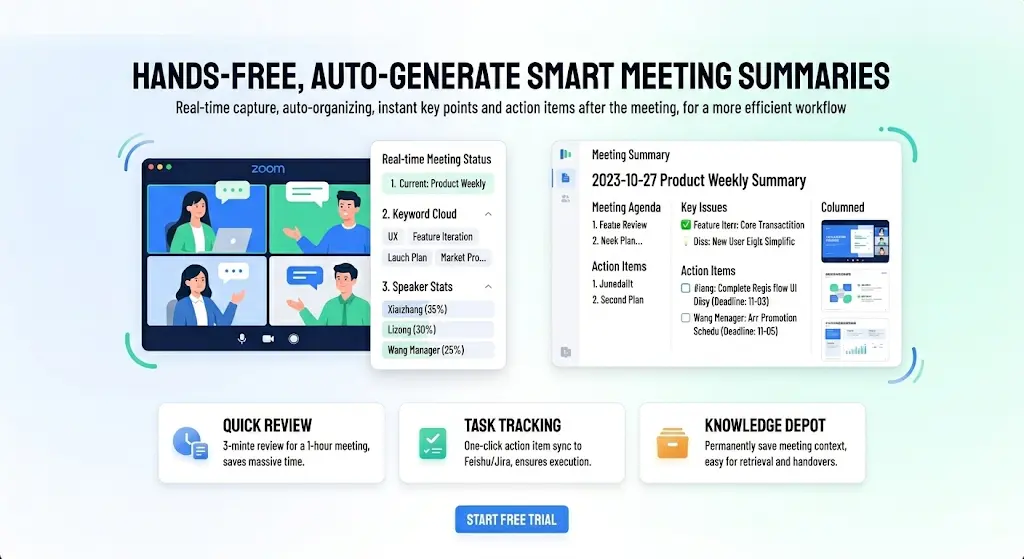
Best AI Note Taker for Zoom in 2026 — Auto Summary, Action Items & Smart Search
Compare the 6 best AI note takers for Zoom meetings. Get automatic transcription, summaries, and action items. See how they stack up on accuracy, features, and price.

How to Convert Video to Text with Visual Descriptions (2026 Guide)
In a world where 80% of internet traffic is video, text-only transcripts leave out half the story. This guide shows you how to use [Memories.ai](https://memories.ai/app) to convert video and audio into text that includes visual narratives, speaker recognition, and customized summaries.