
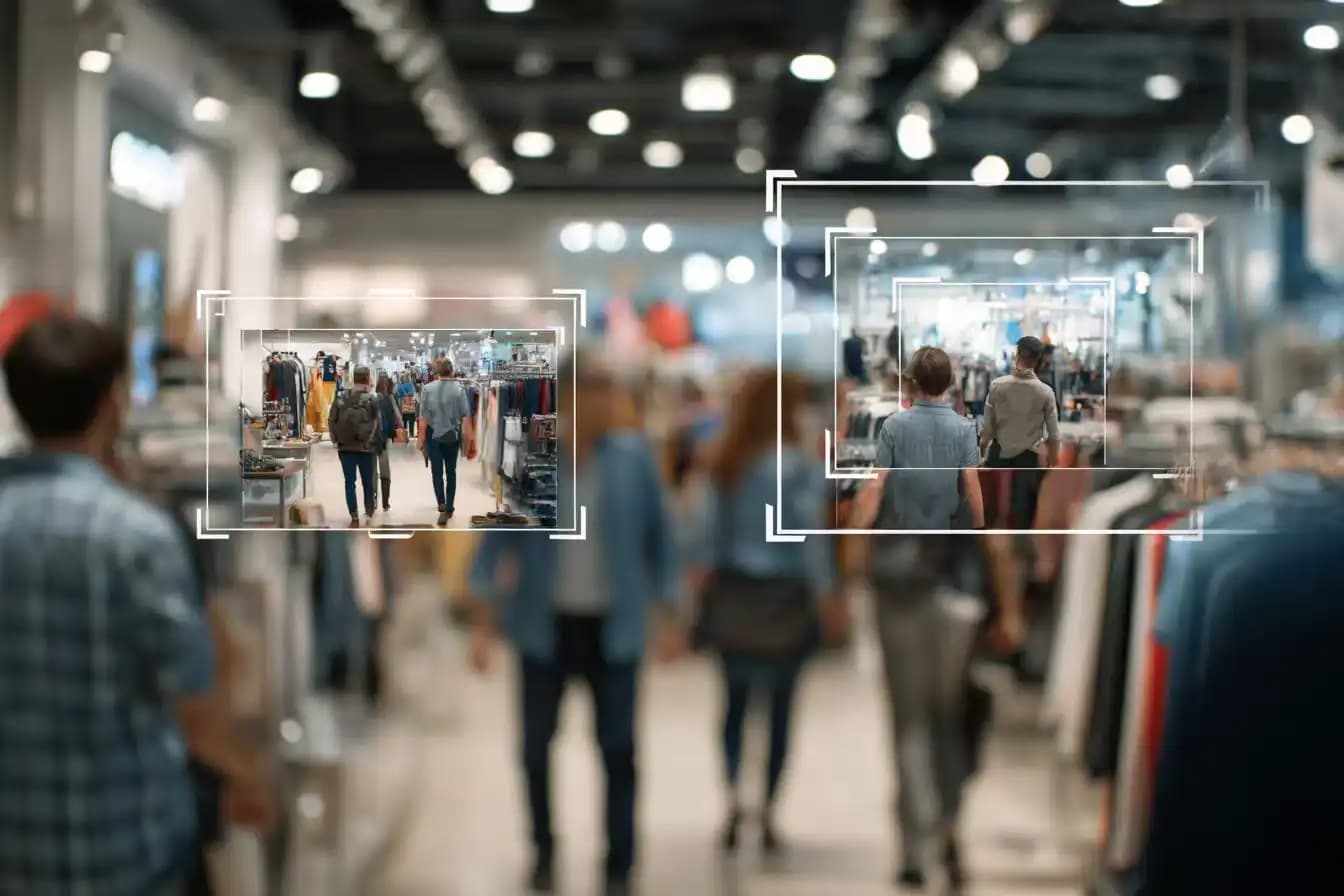
AI Video Retail Analytics: Unlocking Customer Insights for Smarter Retail Decisions
Artificial intelligence–powered video analytics transforms in-store camera footage into real-time customer insights and operational intelligence, enabling retailers to boost sales and streamline operations. With the global retail analytics market projected to exceed USD 32 billion by 2030, harnessing retail analytics with AI video addresses key pain points—opaque shopper behavior, manual staffing guesswork, and undetected shrinkage—by delivering actionable data across every aisle.
This article defines AI video retail analytics, explores how it deciphers customer journeys, optimizes store operations, enhances loss prevention, unpacks core technologies and implementation strategies, demonstrates industry use cases, and resolves common implementation questions to guide enterprises, prosumers, and developers toward seamless adoption.
AI in Retail Analytics Market Growth
The global retail analytics market is projected to experience substantial growth, exceeding USD 32 billion by 2030. This expansion is driven by the increasing adoption of AI-powered solutions to enhance customer insights and streamline operations within the retail sector.
What Is AI Video Retail Analytics and How Does It Work?
AI video retail analytics combines computer vision and machine learning to automatically interpret video streams from in-store cameras and sensors, generating insights on shopper behavior, store performance, and security. By detecting objects, tracking movements, and performing pattern recognition, this technology turns raw footage into metrics like footfall, dwell time, and queue lengths, enabling smarter decisions.
Advanced platforms embed deep learning algorithms into edge devices or cloud services to analyze each video frame for faces, objects, and activities. The resulting data is structured, anonymized, and visualized in dashboards or pushed via APIs into existing systems, supporting personalized marketing, staffing optimization, and proactive loss prevention. Understanding these mechanics lays the foundation for exploring how video systems record customer behavior and the technologies that power this transformation.
How Does AI Use Video to Analyze Retail Customer Behavior?
AI video analytics tracks and interprets shopper interactions by applying object detection to every frame and mapping movement trajectories over time. It recognizes when a customer picks up an item, measures how long they linger near displays, and estimates demographic attributes without storing personally identifiable information. Heatmaps reveal hot zones of product interest, while trajectory maps show preferred pathways through aisles. By continuously learning from patterns, the system refines its models to distinguish genuine engagement from mere passersby.
This behavioral mapping enables retailers to tailor store layouts and promotions to actual customer flows. Bridging raw footage and strategic insights ensures that every shelf placement and signage decision is data-driven, leading seamlessly into the underlying technologies that make such analysis possible.
What Are the Key Technologies Behind AI Video Analytics?
AI video retail analytics relies on an interplay of computer vision, machine learning, and deep learning models, each fulfilling distinct roles that collectively produce accurate, high-speed insights.
To illustrate these relationships, the following table breaks down core technologies:
| Technology | Core Function | Retail Application |
|---|---|---|
| Computer Vision | Extracts objects, shapes, and movements | Footfall counting, product interaction detection |
| Machine Learning | Learns patterns from labeled data | Predicts peak hours, shopper segments |
| Deep Learning | Automates feature extraction via neural networks | Facial emotion estimation, heatmap generation |
| Edge AI | Processes data on local devices with low latency | Real-time queue alerts, on-premise analytics |
| Cloud AI | Scales processing and storage centrally | Cross-store benchmarking, historical trend analysis |
These technologies converge to analyze video inputs, turning pixels into predictive insights that inform merchandising, staffing, and security strategies.
Computer Vision in Retail
Computer vision, a core technology in AI video analytics, extracts meaningful features from video data, enabling the recognition of shoppers, products, and behaviors. This technology forms the foundation for various downstream functions, including demographic estimation and anomaly detection, which are crucial for understanding customer interactions.
How Is Video Data Collected and Processed in Retail Environments?
Video streams originate from CCTV cameras, IP cameras, and IoT-enabled sensors installed throughout store layouts. Footage is captured continuously at varying resolutions and frame rates, then either processed on-site by edge compute units or transmitted securely to cloud servers. On arrival, raw video is decoded, anonymized to remove or blur personally identifiable features, and segmented into events—such as entry, dwell, or exit. AI models then classify these events and output structured records containing timestamps, locations, and inferred attributes (e.g., demographics). This pipeline ensures that sensitive data remains protected while delivering precise, actionable analytics.
How Can AI Video Analytics Improve Customer Behavior Insights?
AI video analytics offers unprecedented visibility into shopper patterns by quantifying behaviors that were traditionally opaque. It bridges the gap between transactional data and in-store experiences, providing a 360° view of what drives conversions.
What Metrics Does AI Track to Understand Shopper Behavior?
- Footfall Count – Measures the number of unique visitors entering defined zones.
- Dwell Time – Calculates how long shoppers linger near specific displays or products.
- Demographic Estimates – Infers age group and gender distribution without recording identities.
- Queue Length – Monitors checkout lines in real time to trigger staffing adjustments.
- Engagement Rate – Detects when products are picked up or examined, indicating interest.
- Pathway Mapping – Charts common journey flows through aisles and departments.
Tracking these metrics uncovers inefficiencies and growth opportunities, setting the stage for journey mapping.
How Does Shopper Journey Mapping Enhance Retail Strategies?
Shopper journey mapping visualizes common routes and touchpoints inside a store, highlighting high-traffic corridors and low-engagement zones. By overlaying heatmaps on floor plans, retailers understand where to position promotions, optimize product adjacencies, and adjust signage. This visual intelligence supports strategic decisions—such as moving impulse buys closer to checkout or rearranging displays to smooth customer flow—that directly translate into increased basket sizes and conversion rates.
Journey insights also reveal friction points, prompting layout refinements that boost satisfaction and reduce congestion. Understanding these flows inspires deeper operational improvements addressed in the next section.
What Benefits Do Retailers Gain from Customer Behavior Analytics?
Retailers leveraging AI video analytics realize multiple advantages:
- Enhanced personalization through tailored in-store promotions.
- Improved planogram compliance via real-time product interaction alerts.
- Higher conversion rates from optimized store layouts.
- Reduced marketing waste by targeting campaigns to high-potential zones.
- Data-driven staffing that aligns floor coverage with peak customer presence.
Benefits of AI Video Analytics
Retailers can achieve multiple advantages by leveraging AI video analytics, including enhanced personalization through tailored in-store promotions, improved planogram compliance, and higher conversion rates. These benefits contribute to an improved customer experience and increased profitability.
Retail Dive, How edge AI is transforming retail operations(2025)
This citation reinforces the article's claims about the positive impacts of AI video analytics on retail operations and customer experience.
These benefits combine to elevate both customer experience and profitability, proving that understanding behavior is foundational to smarter retail decisions.
How Does AI Video Analytics Optimize Store Operations?
AI video analytics extends beyond customer insights to operational excellence, automating tasks that once required constant manual oversight.
How Can AI Improve Staffing Efficiency and Merchandising?
AI video platforms monitor real-time traffic patterns and dwell times to recommend optimal staffing levels per shift. Alerts trigger when queue lengths exceed thresholds or when specific zones become understaffed. Simultaneously, merchandising teams receive notifications about product engagement dips, ensuring displays remain fully stocked and aligned with planograms. This dual capability reduces labor costs and maintains a consistent, engaging store environment.
What Role Does AI Play in Inventory Monitoring and Store Layout?
By tracking product removals and returns, AI systems infer shelf stock levels, flagging potential out-of-stocks before they occur. Continuous monitoring of display interactions highlights underperforming SKUs and overcrowded sections. Combined with journey maps, these insights guide iterative layout adjustments, improving sightlines and reducing bottlenecks. Automated inventory visibility also accelerates replenishment cycles, minimizing lost sales.
How Does Queue Management Enhance Customer Experience?
Queue management powered by edge AI detects line buildup at checkouts and service desks, instantly notifying staff to open additional registers or deploy floating associates. This proactive approach reduces perceived wait times and distributes workload evenly, promoting a smoother checkout experience. Efficient queue flow then feeds back into customer satisfaction metrics, reinforcing a cycle of continuous improvement.
How Does AI Video Analytics Enhance Loss Prevention and Security?
Detecting and deterring shrinkage is a critical retail challenge. AI video analytics fortifies security by spotting anomalies and suspicious behaviors that human monitors might miss.
How Does AI Detect and Reduce Retail Shrinkage?
AI models analyze video for patterns consistent with theft—such as repeated occlusions, abnormal loitering in blind-spot areas, or concealment behaviors. When a potential incident is flagged, the system generates a real-time alert to security personnel, complete with video clip and location data. Historical analytics also quantify shrinkage hotspots, guiding strategic placement of detectors and signage to deter misbehavior. This continuous feedback loop measurably lowers losses.
What Are Anomaly Detection and Safety Monitoring in Retail?
Anomaly detection extends beyond theft to safety events like spills, overcrowding, or unattended items. By establishing a baseline of normal activity, AI flags deviations—such as a customer falling or a cart left in a walkway—and triggers alerts for immediate response. This capability ensures both shopper and staff safety while maintaining compliance with workplace regulations.
How Does AI Video Support Real-Time Security Alerts?
Edge compute nodes process footage locally to minimize latency, enabling sub-second alert delivery when threats arise. Alerts integrate with security dashboards and mobile apps, equipping guards and managers with live video links and incident details. This proactive framework shifts security from passive observation to active prevention, fostering a safer environment that also supports brand reputation.
What Are the Key AI Technologies and Implementation Strategies?
A robust AI video retail analytics solution balances advanced algorithms, hardware deployment, and compliance frameworks to deliver scalable insights.
What Is Computer Vision and Why Is It Central to Retail Analytics?
Computer vision uses convolutional neural networks to extract meaningful features—edges, textures, and shapes—from raw pixels. In retail, this enables instant recognition of shoppers, products, and behaviors without manual coding. As the backbone of video analytics, computer vision drives all downstream functions, from demographic estimation to anomaly detection.
How Do Edge AI and Cloud AI Differ for Retail Video Analytics?
Edge AI processes video on-site, reducing bandwidth needs and ensuring real-time responsiveness.
Cloud AI centralizes computation for large-scale model training and cross-store comparisons.
| Deployment Model | Latency | Scalability | Ideal Use Case |
|---|---|---|---|
| Edge AI | Sub-second | Limited by hardware | Instant queue alerts, local safety monitoring |
| Cloud AI | Seconds | Virtually unlimited | Long-term trend analysis, multi-store benchmarking |
Combining edge and cloud creates a hybrid architecture that maximizes speed and analytical depth.
How Is Data Privacy Ensured in AI Video Retail Analytics?
Retailers implement anonymization techniques—such as face blurring or skeletal tracking—to prevent identification of individuals. Data storage and processing comply with GDPR and CCPA by encrypting footage, limiting retention periods, and providing audit logs. Privacy experts review workflows to verify that only aggregated, non-identifiable metrics exit the system, building trust with both regulators and customers.
How Can Retailers Integrate AI Video Analytics with Existing Systems?
APIs expose key insights—like footfall counts or shrinkage alerts—to POS, CRM, and workforce management platforms. Standard RESTful interfaces and SDKs support rapid integration, while webhook notifications push real-time events into custom dashboards. This modular approach allows enterprises and prosumers alike to layer analytics onto legacy infrastructure without disrupting daily operations.
What Are the Industry Use Cases and Benefits of AI Video Retail Analytics?
Different retail segments unlock unique advantages from video analytics, demonstrating versatile ROI across formats.
How Does AI Video Analytics Benefit Luxury Retail and Fashion Boutiques?
Luxury stores gain from emotion analysis and heatmaps to refine merchandising of high-margin products. Subtle shopper cues—like hand gestures or expressiveness—guide personalized service, enabling associates to approach at the perfect moment. Trend detection algorithms also surface emerging style preferences, shaping curated collections that resonate with discerning clientele.
What Advantages Does AI Offer Grocery Stores and Quick Service Restaurants?
Grocery chains leverage video insights to monitor perishable inventory interactions, optimizing restocking to reduce food waste. In QSR environments, AI tracks order pickup areas, streamlining drive-through and counter service by balancing staff assignments with real-time customer flows. The result is fresher shelves, faster service, and reduced labor costs.
How Can Retailers Calculate ROI from AI Video Analytics Investments?
Retailers measure ROI by comparing key performance indicators before and after implementation: shrinkage reduction percentage, uplift in conversion rates, labor cost savings, and average basket value increases. Case studies often reveal a 10–20 percent sales lift from layout optimizations and a 15–20 percent shrinkage drop through proactive loss prevention, yielding rapid payback periods within months.
What Are Common Questions About AI Video Retail Analytics?
Below are concise answers that guide decision-makers through implementation considerations, ensuring clarity without diluting technical depth.
What Is AI Video Analytics in Retail?
AI video analytics in retail uses computer vision and machine learning to process in-store video streams, delivering actionable insights into customer behavior, operational efficiency, and security in real time.
How Does AI Improve Customer Experience in Retail?
AI enhances customer experience by mapping shopper journeys, optimizing store layouts, and enabling personalized promotions based on real-time engagement and demographic insights.
How Does AI Help Reduce Theft and Shrinkage?
AI detects suspicious behavior and anomalies in video footage, alerts security staff immediately, and analyzes historical patterns to prevent recurring loss hotspots and deter future incidents.
How Do Retailers Implement AI Video Analytics Solutions?
Retailers implement AI video analytics by deploying edge or cloud processing units connected to existing cameras, integrating insights via APIs into POS and workforce systems, and ensuring compliance through anonymization and secure data handling.
Artificial intelligence–driven video analytics revolutionizes retail by offering clarity on customer behavior, operational bottlenecks, and security risks. By unifying advanced computer vision, edge-cloud architectures, and privacy-first design, retailers achieve data-backed strategies that drive sales growth, workforce optimization, and shrinkage reduction. As AI video retail analytics matures, enterprises and prosumers alike gain a competitive edge, transforming in-store experiences into measurable business outcomes.
Read more

Best Meeting Transcription Software in 2026 (Tested & Compared)
We tested 8 meeting transcription tools head-to-head. Compare accuracy, AI summaries, pricing, and integrations to find the best fit for your team.
Best AI Note Taker for Zoom in 2026 — Auto Summary, Action Items & Smart Search
Compare the 6 best AI note takers for Zoom meetings. Get automatic transcription, summaries, and action items. See how they stack up on accuracy, features, and price.

How to Convert Video to Text with Visual Descriptions (2026 Guide)
In a world where 80% of internet traffic is video, text-only transcripts leave out half the story. This guide shows you how to use [Memories.ai](https://memories.ai/app) to convert video and audio into text that includes visual narratives, speaker recognition, and customized summaries.